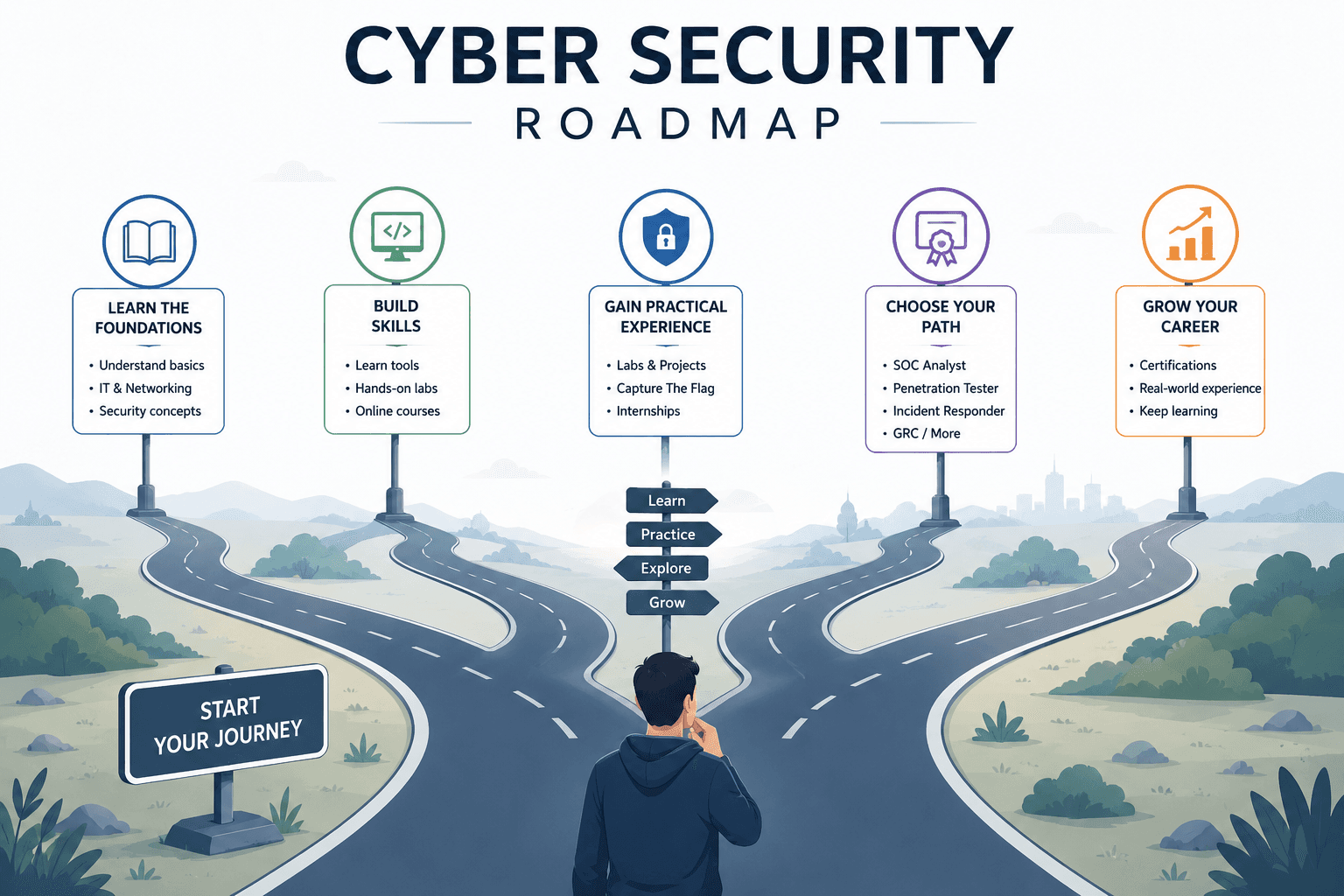
Cybersecurity Can Feel Overwhelming
Cybersecurity is a very large field. Beginners often feel overwhelmed because there are many different topics to learn, including networking, Linux, cloud security, penetration testing, log analysis, malware, and more. The good news is that you do not need to learn everything at once. Starting with the fundamentals and practicing consistently is the best way to build confidence.
Understand What Cybersecurity Really Is
Cybersecurity is the practice of protecting systems, networks, applications, and data from attacks or unauthorized access. There are many different career paths in cybersecurity, including SOC analysts, penetration testers, cloud security engineers, DFIR analysts, and security engineers. Beginners should focus on learning core concepts before specializing in one area.
Start with Computer & Networking Basics
Networking knowledge is one of the most important foundations in cybersecurity. Before learning advanced security topics, beginners should understand IP addresses, DNS, HTTP and HTTPS, operating systems, and how devices communicate with each other.
💡 Tip
Learn Linux Basics
Linux is heavily used in cybersecurity, cloud systems, servers, and security tools. Learning basic Linux commands helps beginners understand systems and become more comfortable using terminals.
pwd
ls -la
cd /tmp
💡 Tip
Practice Instead of Only Watching Videos
One of the most common beginner mistakes is spending too much time watching tutorials without practicing. Hands-on labs help build confidence much faster because they allow you to apply concepts in real environments.
⚠️ Warning
Learn Core Security Concepts
After learning the basics, beginners should start exploring important cybersecurity concepts such as the CIA Triad, Pyramid of Pain, authentication, phishing, and log analysis. These concepts help build a strong security mindset and improve understanding of how attacks and defenses work.
Build Consistency Instead of Speed
Cybersecurity is not something you learn overnight. Many beginners compare themselves to advanced professionals and become discouraged. Learning consistently for 30–60 minutes each day is much more effective than trying to learn everything quickly.
Avoid Common Beginner Mistakes
Many beginners try to jump directly into advanced hacking techniques before learning the fundamentals. Others avoid networking or Linux because they seem difficult. Building strong fundamentals first makes advanced cybersecurity topics much easier later.
⚠️ Warning
A Simple Beginner Roadmap
A beginner roadmap might look like this: Month 1: - Linux basics - Networking basics - Terminal usage Month 2: - Log analysis - Authentication concepts - Web fundamentals Month 3: - Beginner labs - Security concepts - Simple investigations
Start Practicing
The best way to improve in cybersecurity is through hands-on practice. Start small by practicing Linux commands, reading logs, exploring beginner security concepts, and completing guided labs. Over time, your confidence and technical skills will grow naturally.
💡 Tip
Conclusion
Every cybersecurity professional started as a beginner. Focus on consistency, fundamentals, and hands-on practice. Over time, the concepts that once felt overwhelming will become much more familiar and easier to understand.